Steampunk Currency

I’ve always admired countries that put figures other than national political leaders on their currency.  The UK £20 note featured the great scientist Michael Faraday for a while in the 1990s and in pre-Euro days, Galileo was on the Italian 2000 lire note. Apparently Jane Austen is scheduled to appear on a UK £10 note next year.  The closest that the US has gotten is Benjamin Franklin on our $100 bill.  While Dr. Franklin was a noted scientist of his day, he is featured on US currency because he was one of the Founding Fathers of the United States.

It was not always so, however. Continue reading

Dispelling Corset Myths

I’m the first to admit that I know little about sewing and almost as little about details of Victorian fashions, but I am keen on dispelling myths about the past, especially those that are endlessly repeated on the Interwebs or, even worse, by docents at historic homes and museums.

So, I found this article on myths of corsets both entertaining and informative.  Now, as a proper Victorian man, I wouldn’t be expected to know anything about corsets for the most part. But as an improper Steampunk man, well, Steampunk women wear their corsets on the outside, so they’re not as hidden as they would otherwise be.

The article busts (see what I did there?) the myths  of corsets and how they were supposedly worn using actual measurements of historic garments, and explaining how the illusion of the hourglass figure was created.  So the next time you come across an expert telling you about 18-inch Victorian waists and removing ribs and pushing organs around and the origin of the fainting couch, you’ll know better.

The Harrison Clocks

A recent post on the Two Nerdy History Girls blog prompted me to remember the wonderful book “Longitude” by Dava Sobel chronicling the history of John Harrison and his lifelong pursuit to develop an accurate chronometer.

In 1714, the Royal Navy had a problem.  Although it was a rather simple procedure to determine the latitude of a ship at sea (by sighting angle of the the sun at noon or Polaris, the North Star, at night), it was exceedingly difficult to determine a ship’s longitude.  After several maritime disasters resulting from faulty navigation, Parliament passed the Longitude Act which offered monetary rewards for methods to determine longitude at sea.

Continue reading

My First Blog-iversary

One year ago today, I took my first tentative steps into this thing called “blogging”, and it has been an interesting year indeed.

I named the blog “Airship Flamel” after the airship that features in my steampunk novel “To Rule the Skies”.  As I was finishing up editing that book, I found that I had accumulated so many interesting stories and historical tidbits while doing research on the time and culture (Victorian). Writing a blog seemed the best and most fun way of writing some non-fiction as well.

Some statistics, thanks to the WordPress Insights page:  This entry is my 89th blog entry of the past year.  That includes re-blogs–I’m not above featuring the work of another blogger on Airship Flamel with proper credit, of course.  No sense re-inventing the wheel, and all that…

The most popular post has been “Did Mark Twain and Charles Dickens ever meet?” which I published back in October and has been read 299 times.  While I found it very interesting to ponder that question myself, the post wasn’t very popular at first, but then really took off in the spring.  I wonder if a teacher somewhere had given the question out as a essay topic.  Before then, my most popular post had been “The Colors of the Past” which examined how poorly early photographic plates recorded different colors, so that we really can’t always be sure what color objects are in period photographs.

In September, my novel was published both as an e-book and as a hard copy.  The second book in the Airship Flamel Adventures series is currently in draft form and my goal is to have it completed by May, 2016.

In December, I previewed Christmas with the Twelve Days of Steampunk Christmas posts which were re-tweeted by Airship Ambassador which generated much traffic to the blog.  They’re still being read almost every day.

In February, I started a new full-time job, which definitely put a dent into the time I had to write.  I’m starting to get the work-life, or rather, work-write balance back on a more even keel, so I predict more regular blog posts in future.

Most of all, I’d like to recognize some of the blog posts that pop up in my reader from some very talented and interesting writers.  Cogpunk Steamscribe gives an always interesting take on steampunk and writing from Down Under.  I don’t know how many times we’ve reblogged each other’s posts!  Another favorite is For Whom the Gear Turns which posts about Steampunk, London, and Making.  Mr. Lee Jackson, a prodigious tweeter, is the author of The Dictionary of Victorian London, an excellent resource for anyone doing research (or just curious) about just about any aspect of Victorian London.  His recent book, “Dirty Old London: The Victorian Fight against Filth” is on my to-read list.

Finally, for the 4,481 times that someone has come to my blog during the past year, I hope that I have educated and entertained, and promise that I shall endeavour to continue to do so.

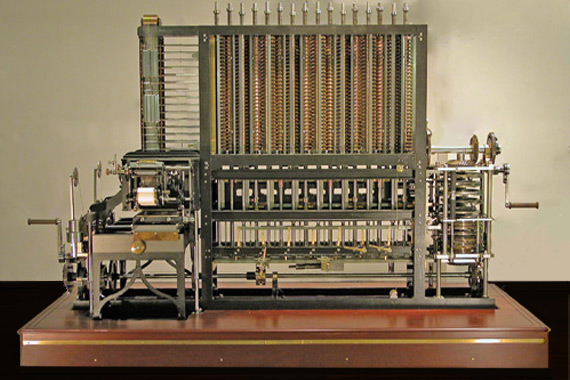
Fantastic Devices to Improve your Steampunk Reality: The Difference Engine

This post ponders a topic that I consider when writing Steampunk/Alternate History: How much real (vs. fantastical) science and technology to include in your writing.

jgriswoldauthor's avatarAirships, Automatons, and Aliens...Oh My!

image

Airships. Steam powered trains. Carriages drawn by mechanical horses, or self-propelled. When most people think of steampunk, these types of images frequently come to mind. Often these images are accompanied by automatons running amok, strange contraptions that bare little, if any resemblance to devices that currently exist, filled with cogs, gears and springs.

When it comes to the technology of a steam punk reality, the expectation seems to be big and impressive. But perhaps in a reality where the steam engine never gave way to the modern internal combustion engine, there is still a chance of a similar technological revolution. Perhaps in a world of steampunk, the world would be forever changed by a single device. A device that could take complex data and simplify it, translating it into information that the common man could use. We have the computer; our steampunk counterparts might have The Difference Engine.

For one…

View original post 448 more words