The Harrison Clocks

A recent post on the Two Nerdy History Girls blog prompted me to remember the wonderful book “Longitude” by Dava Sobel chronicling the history of John Harrison and his lifelong pursuit to develop an accurate chronometer.

In 1714, the Royal Navy had a problem.  Although it was a rather simple procedure to determine the latitude of a ship at sea (by sighting angle of the the sun at noon or Polaris, the North Star, at night), it was exceedingly difficult to determine a ship’s longitude.  After several maritime disasters resulting from faulty navigation, Parliament passed the Longitude Act which offered monetary rewards for methods to determine longitude at sea.
Continue reading

Fascinating Early Motion Pictures of London

The link below is to an amazing video from Yestervid.com of early motion pictures of London, including the oldest (a view of Trafalgar Square) as well as the earliest recording, on Edison wax cylinder, of the chimes of the Clock Tower.

As interesting as it is to see how much has changed in London over the 100-plus years since most of these motion pictures were taken, it is equally interesting to see how much has not changed.

Also great reference for period costumes!

Yestervid.

As American as Apple Pie?

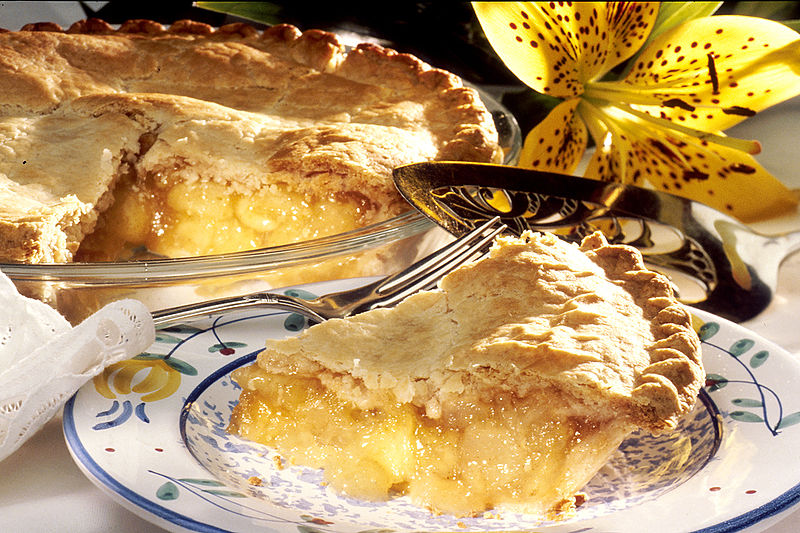
800px-FoodApplePieAs the Thanksgiving holiday in the US approaches, thoughts turn to the food that we are thankful for. One of my traditions is to bake an apple pie using the recipe that, so my father told me, was my grandmother’s. While she would probably be shocked at my using frozen crusts instead of rolling out crusts from scratch, I always think of her when I make it.

The expression “as American as apple pie” gets bandied about a lot, without much thought to whether apple pie is American at all. So, is it? Continue reading

Horrible Histories–Charles Darwin

Charles Darwin is one of Steampunk’s favorite scientists and rightly so for his revolutionary ideas concerning evolution, not to mention his prodigious beard.  While his adventures on the HMS Beagle make for great reading, On the Origin of Species can be deadly dull reading.

Fortunately, along came the award-winning BBC “children’s” TV show Horrible Histories.  I’ve put the quotation marks there because it’s just as entertaining for adults, at least this adult. You can find lots of excerpts and some entire episodes on YouTube (although it looks like you have to pay for the full episodes). Continue reading

Airships over California!

If you tracked the frequency of Google searches, you’d find a large spike last week for “Bay Area airship”, but not because of a sudden invasion of dirigibles over the San Francisco Bay.

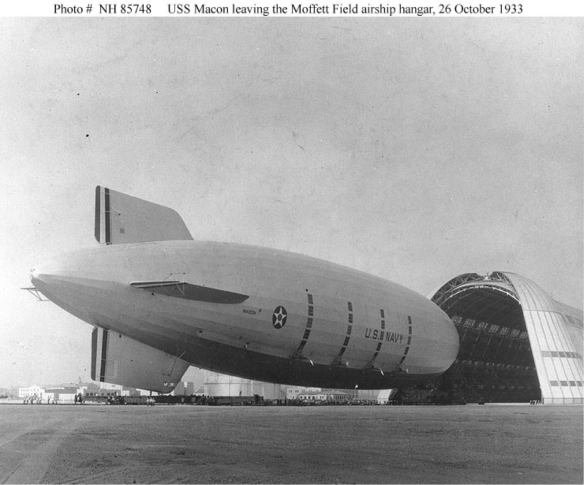
The Germans were the acknowledged leaders in airship technology during World War I. But they lost the war anyways and as part of war reparations, Luftschiffbau Zeppelin built an airship for the US–USS Los Angeles (ZR-3).  After the successful tests of this airship, the US Navy commissioned two airships from the Goodyear Zeppelin Company. The two airships were christened the USS Akron (ZRS-4) and the USS Macon (ZRS-5).  The ships were huge, only slightly shorter than the Hindenburg.

USS Macon entering Hangar One

The Akron was assigned to Lakehurst, New Jersey. She had an accident-plagued career that lasted less than two years which ended with its crash into the ocean off the New Jersey coast with the loss of all but three of her crew. Continue reading

London Bridge is falling down, and going back up, and falling down again, and being rebuilt, and burning down, and…

A link on the Two Nerdy History Girls blog led me to Hidden London, a website replete with interesting articles highlighting little-known sites and facts about London. On this website, I learned about an almost impossibly ancient organization that many Londoners unknowingly interact with every day.

There has been a bridge across the Thames at the present site of London Bridge since the time of the Roman occupation. The bridge was such a crucial transportation link between the Roman roads to the north with the routes heading southward that a small trading post that sprung up on the north side of the bridge grew to become the Roman city of Londinium—the beginnings of the City of London. (Yes, London Bridge is older than London!) Continue reading

The Spitalfields Nippers

A link to a Daily Mail Online article about a set of photographs that were taken in the decades surrounding 1900 showing the heartbreaking state of the children of the poor inhabitants of Spitalfields in East London. The photographer was Horace Warner, a Quaker working in the East End to fight poverty and hunger.  Some of his photographs were used to highlight the plight of the poor; most were stored away until now.

Adelaide Springett was so ashamed of her tattered boots, she took them off for this 1901 photograph. Source: Daily Mail website  (link above).

Adelaide Springett was so ashamed of her tattered boots, she took them off for this 1901 photograph. Source: Daily Mail website (link above).

Those of us enamored by the Victorian Period or its revival movement, Steampunk, often forget that it was not all tea parties and polished brass doorknobs.  Not everyone had a country manor or took the “Grand Tour” through Europe to finish one’s education. The orphanages and workhouses were full, and not with the happy, singing orphans of “Oliver!” either.

One UK Victorian reenacting group that I’ve learned off, “The Ragged Victorians” strive to recreate the squalid, the poor, “The great unwashed”, as their website describes it.  We should not forget this aspect of Victorian life as we celebrate the happier side.