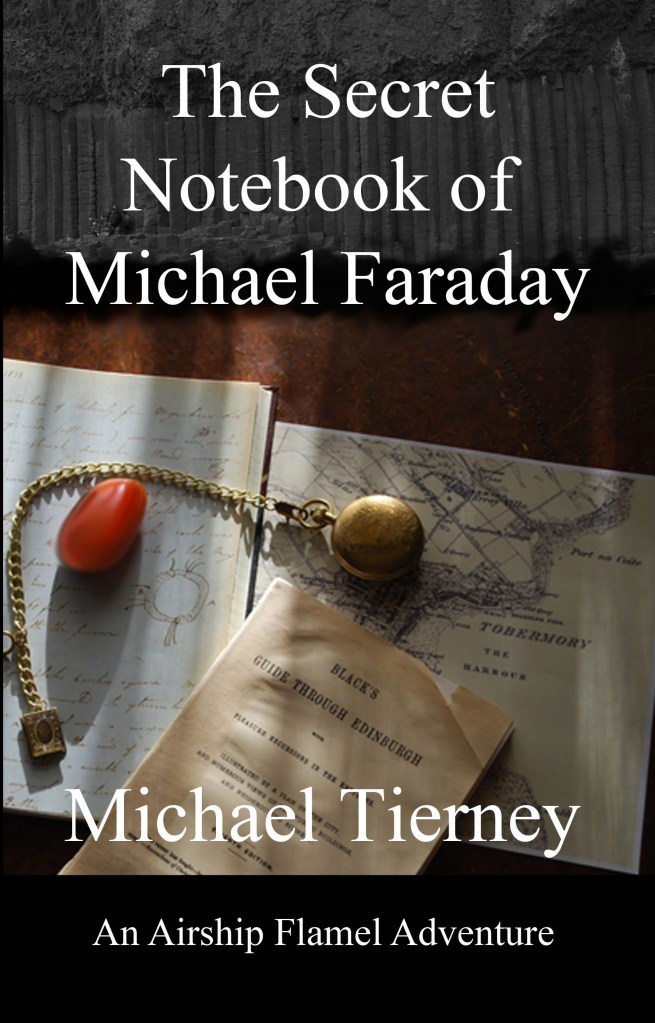
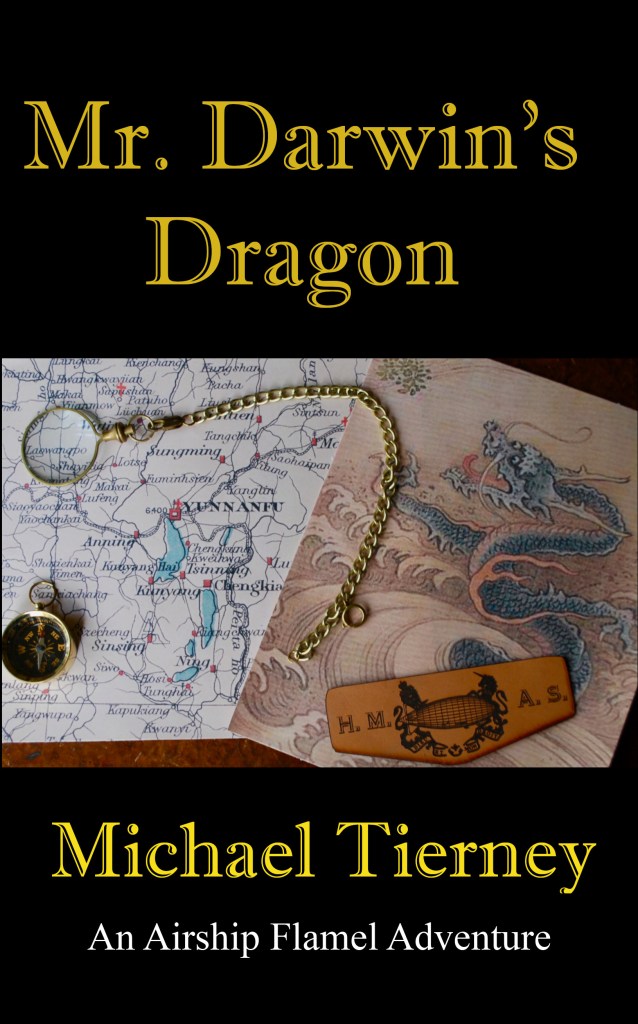
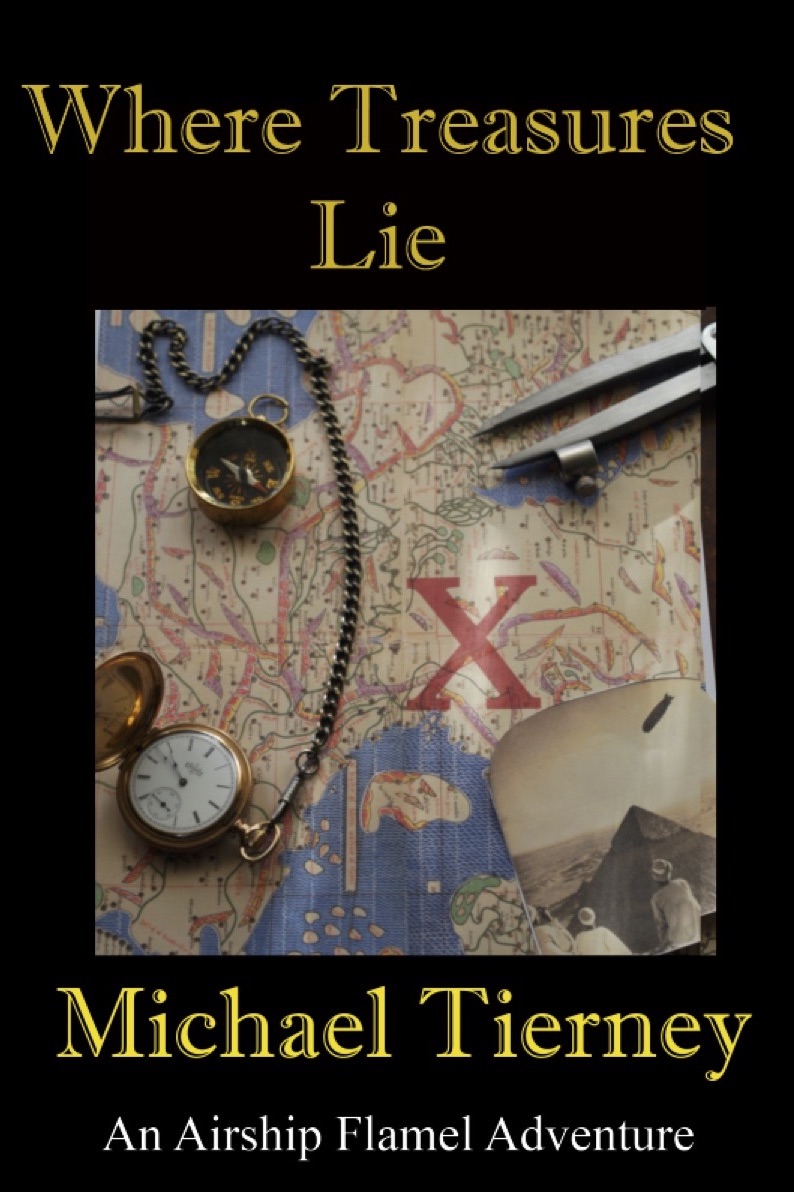
From December 15 to the end of January 1, the four issues in the Airship Flamel Adventures Series will be discounted on Smashwords for half-price (or $1.74 for the electronic versions of these books.) And the Anteprologue to the first book in the series is available free!
The main character (our hero!) is Professor Nicodemus Boffin, who commands the airship Flamel, an airship which contains all manner of advanced technologies, much invented by the professor himself. The Flamel travels the world on an extended voyage of discovery. At times, however, Flamel and its crew are called upon to undertake “extraordinary duties” for Queen, Country, and Empire.
Click on the titles below to read more about this steampunk adventure series.
Summer is approaching and thoughts turn to time spent in the great outdoors, if not exactly in the wilderness.
Here’s an interesting recent article from the New England Historical Society entitled “Thomas Edison Tries to go Camping in New Hampshire“. While the time is a bit later than what is typically considered steampunk, it should give some ideas on just how to mount a camping trip with all the bells, whistles, and that a steampunk with an infinite amount of money and technological acumen might expect.
And if you’re interested in period camping equipment, here’s a vintage equipment catalog to get you started.
I am happy to announce that my latest novel in the Airship Flamel Adventures series is now available on Amazon in paperback and Kindle versions.
Here’s the synopsis:
Jonathan Boffin runs away from school one day and stows away on an airship in hopes of following his dream to become an airpirate. Captain MacNee takes him under his wing and employs him as a cabin boy while teaching him airmanship and piracy.
Years later, Jonathan, now Airpirate Captain Jonathan Blackguard plunders an ancient map from a prize ship. He quickly discovers that he lacks the skill in interpreting it. Only the large red X in the center of the map tempts him to continue seeking the secret of the map and the treasure that must lie where the X marks the spot. Eventually he concedes that only one person has both the intelligence and the integrity to help him decipher the secret of the map: his father, Professor Nicodemus Boffin, from whom Blackguard ran away from. But will his father put aside years of estrangement in hopes that working with his son will bring him around to his father’s point of view? And what will the treasure turn out to be?
As opposed to my previous books, this story is told somewhat more from Jonathan’s point of view and features his disagreements with his father. This book completes the three-story arc–The Secret Notebook of Michael Faraday, Mr. Darwin’s Dragon, and Where Treasures Lie, although To Rule the Skies takes place after this book. And I would not be too surprised if another book with the same characters crossing paths with a famous scientist or two at some point.
The book will be launched next weekend (April 7-9) at Clockwork Alchemy, the Bay Area’s steampunk con. I’ll be at the Author’s Alley along with a number of my fellow authors. I’ll be also giving two presentations–on Steampunk Architecture and on Victorian Scientists. Since the theme of the con this year is Villains and Heroes, I’ll be sorting things along those lines. And there were plenty of villainous scientists and engineers during the Victorian Era to keep things interesting.
I’ve been involved in Steampunk for over seven years, but it wasn’t until this year that I realized that there’s not much in the way of steampunk cuisine. I’m not sure exactly why this is– most steampunks I know certainly enjoy eating, and a good number enjoy cooking as well.
Sure there are plenty of steampunk beverages–tea, of course, as well as various libations of the alcoholic persuasion–rum, gin, absinthe–depending on how fancy you feel. But there is a dearth of steampunk-related foods.
I hope to remedy this deficiency.
Let’s start with what I consider the most steampunk piece of kitchen hardware–one that uses the mighty power of steam itself to cook your food. I am speaking, of course, of what was once known as the “pressure cooker” and is now branded as the Instant Pot. They consist of a pot with a sealed lid that when heated pressurizes the contents of the pot.
So how do these infernal devices work? At normal atmospheric pressure, water boils at 100C (212 F for you American non-scientists). However, remember the Ideal Gas Law from freshman chemistry (PV = nRT). Because the pressure cooker is sealed, the internal pressure (P) rises as the temperature increases and thus, the boiling point of the water in the cooker rises. So the water inside now boils at about 121C (250F). Higher temperature means faster cooking.
Of course, the higher pressure could mean a higher risk of explosion if the pressure cooker isn’t equipped with a pressure-relief valve or if it gets clogged with what’s being cooked. I can remember my mother cooking with a 1970s era pressure cooker and feeling a vague sense of imminent danger from the hissing, steaming device. Modern Instant Pots seem to be safer.
Vintage Pressure Cookers
The photos above show some vintage pressure cookers, and it should be obvious just how steampunk they look. The cooker’s lid is kept sealed by sturdy clamp bolts. The lid itself is festooned with pressure and temperature gauges as well as pressure relief valves to release excess steam and prevent unwanted explosions.
I haven’t jumped on the Instant Pot bandwagon. Perhaps the memories of my mother’s pressure cooker steaming away on the stove has hindered me. Still, my search for steampunk cooking continues unabated.
My next installment about Steampunk Cuisine will come next week. In the meantime, if you’ve got any good ideas for steampunk recipes, please leave them in the Comments section below.
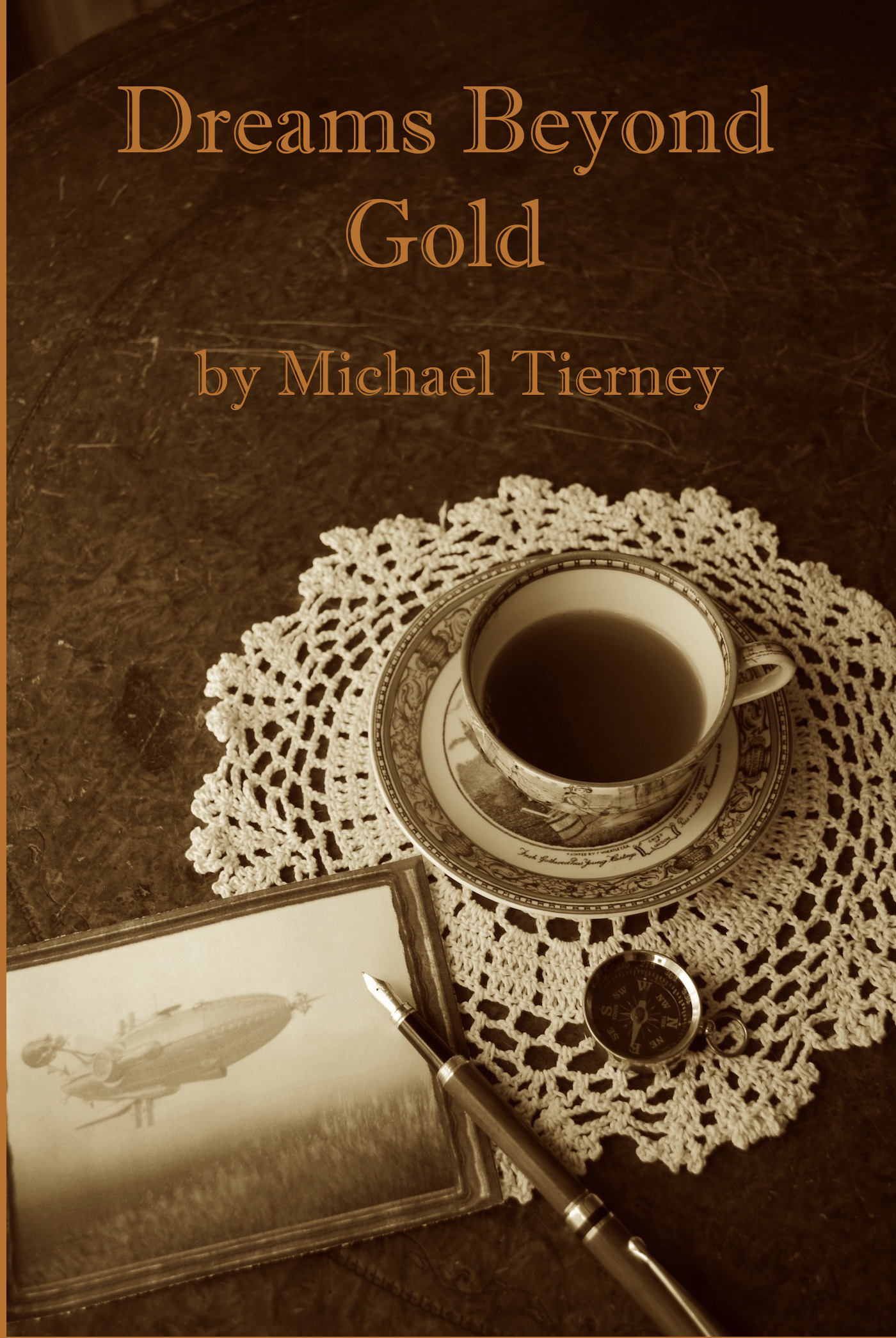
Did you enjoy this blog post? Interested in more? My new FREE short story “Dreams Beyond Gold” is available HERE. It’s the tale of an airship rpirate captain who is looking to try his hand at more literary pursuits.
You will also be signed up to receive my periodic newsletter with information on my writing, as well as other interesting tidings. And I pledge: No Spam.
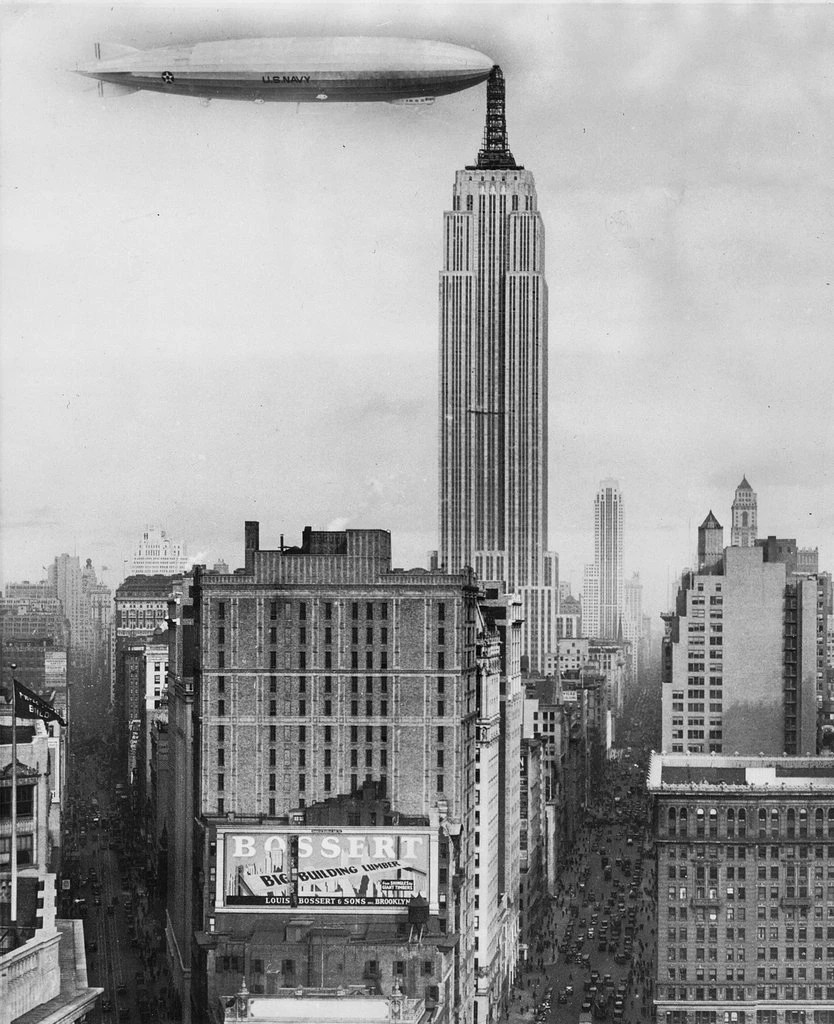
One oft-told story involves the use of the Empire State Building as a mooring mast for airships like the Hindenburg. It sounds plausible. The spire of the Empire State Building certainly resembles a mooring mast, and if King Kong is not scaling the building, it appears that there’s plenty of room to moor. And no self-respecting steam- or diesel-punk would forgo the chance of mooring his airship at the Art Deco splendor of the Empire State Building.
However, oft-told stories can take on a life of their own in the cold and windy light of day.
The 1930s were the heyday of lighter-than-air dirigibles with the German airships Graf Zeppelin and Hindenburg flying travelers around the globe in luxury that could only be compared to that of the most opulent hotels or glamorous trains. Although the US and Britain had no commercial airships, they advanced the capabilities of military airships over time. Airships on the transatlantic route generally landed at the Naval Air Station in Lakehurst, New Jersey which had the facilities needed to maintain and service the ships. However, Lakehurst is quite some distance from the passengers’ typical destination of New York City. So, having a landing spot closer to New York would be a great benefit for transatlantic flights.
Composite photograph showing how the Navy airship Los Angeles would appear moored to the Empire State Building.Continue reading →
When considering pirates (or airpirates, if you’re in a steampunky mood), one’s thoughts immediately turn to treasure–large chests of coins, gold bars, and bejeweled bric-a-brac. And I’m sure no self-respecting pirate would pass these by. In reality, however, the definition of “treasure” was broader than what we normally assume.
I give you two examples of pirates who changed western cuisine as we know it.
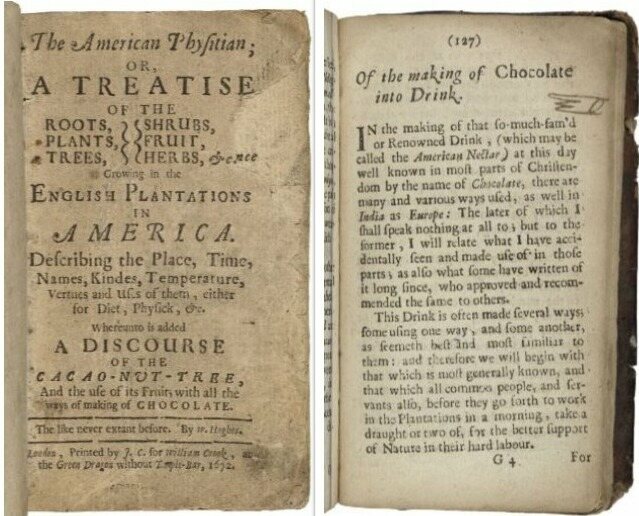
Hughes’s treatise includes instructions on how to convert cacao to the chocolate drink.
William Hughes was a botanist by training, or at least by avocation. Hughes set out for the Caribbean in the 1630s and eventually found his way onto the crew of a British privateer, sanctioned by the Crown to raid Spanish trading ships. As they made their way around the Caribbean in search of plunder, Hughes had the chance to survey the local flora, how it could be grown, and how the indigenous population prepared and ate it. In 1672, after his piratical days were over, he summarized his findings in a treatise titled The American Physitian. Among the plants he described were the lime (“excellent good against the Scurvie”), sugarcane (“both pleasant and profitable”), and prickly pear (“if you suck large quantities of it, it coloureth the urine of a purple color” which I can only imagine was the basis of many shipboard pranks.)
The largest section of his book concerned cacao which he was so enamored with that he deemed it “the American nectar”. The Spanish had already encountered cacao as early as Columbus in 1502, but it took them over a century to accept it as suitable for drinking. One traveler to Nicaragua held it to be more fit for pigs than people. The British were lagging even further; it wasn’t until Hughes’s book that cacao was fully described in English. The ingredients that Hughes describes to flavor hot chocolate reads like a description of the spice trade itself: “milk, water, grated bread, sugar, maiz, egg, wheat flour, cassava, chili pepper, nutmeg, clove, cinnamon, musk, ambergris, cardamom, orange flower water, citrus peel, citrus and spice oils, achiote, vanilla, fennel, annis, black pepper, ground almonds, almond oil, rum, brandy, sack.” His personal recipe for hot chocolate has been replicated, and sounds delicious!
By the time his book was published, Hughes had settled down, and was working as a botanist in England, puttering around on the country estate of Viscountess Conway. Cacao, and its liquid version, chocolate, however, expanded out from Central America to the entire globe, surpassing even the spreads of other New World crops as tomatoes, corn, or potatoes.
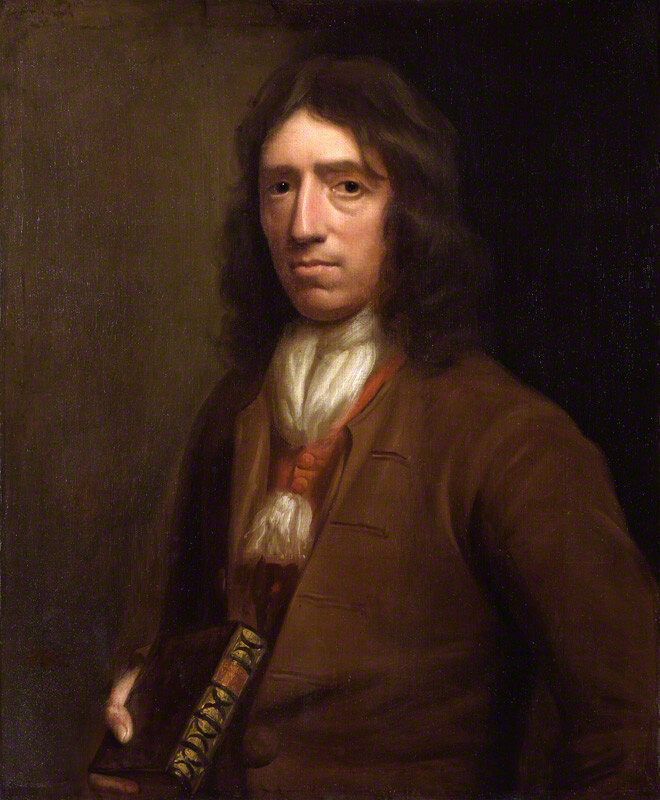
A generation or so later, another English buccaneer, William Dampier, took up the mantle of Pirate-Epicurean. Dampier had a long history as a pirate and privateer, making three complete circumnavigations of the globe and attacking Spanish ships wherever they could be found. He also seems to have eaten his way around the world, finding new and different foods wherever he went. He recorded his findings in detailed diaries which he kept safe in wax-sealed bamboo tubes. After his first circumnavigation (on which in 1688 he was also the first Englishman to land in Australia), he published his diary A New Voyage Around the World in 1697 to great success. In his book he described a wide variety of animals and their edibility–flamingos, Galapagos penguins, manatees. He highlighted the breadfruit from Tahiti as an excellent food, so much so that the British adopted it to feed slaves in their Caribbean plantations (leading indirectly and much later to the mutiny on the Bounty).
William Dampier, National Portrait Gallery, Public Domain
Dampier also described a fruit “as big as a large lemon … [with] skin [like] black bark, and pretty smooth”–the avocado–and adds that it can be prepared “mixed with sugar and lime juice and beaten together [on] a plate.” Thus, the first recipe in English for guacamole.
His botanical and scientific observations made him famous. Besides compiling lists of edibles, he also monitored the weather, measured currents, and collected botanical specimens throughout his voyages. Both Charles Darwin and Captain Cook carried his book on their voyages. However, he never totally gave up his piratical activities throughout all of his voyages, raiding Spanish ships and ports around the world.
Before the mid-1800s, the typical household owned very few, if any, illustrations. Newspapers had no pictures; Periodicals had none until the 1840s. Books contained only expensive engravings. Photography was still a science experiment.
However, once photography became main-stream, a revolution occurred that enabled three-dimensional images from around the world to be available in almost every Victorian parlor—the stereoview.
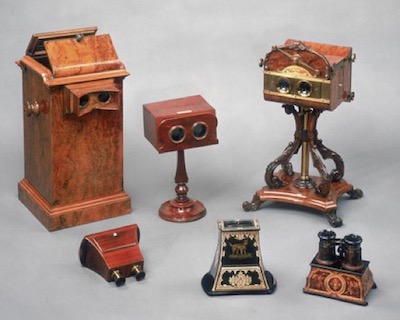
A British scientist, Charles Wheatstone, first developed three-dimensional viewing using an optical instrument that would be recognizable today as a stereoscope. Wheatstone started his work before photography was developed, and experimented by making pairs of hand-drawn images that produced the 3-D effect. Wheatstone also had the advantage of being able to “free view”, i.e., to see the 3-D effect without using an instrument. (Remember those “Magic Eye” books from the 1990s where you had to make your eyes go all weird to see the 3-D effect.)
The trick is to fool your eyes into perceiving that a pair of photographs taken from two different angles appears to be a single three-dimensional image with the ability to see objects close and far away properly maintained. As one stereoview advertisement claimed:
When you look at it through the wonderful lenses of our stereoscope, the figures stand out so plainly that you almost expect to see them move. It’s just like being there.
Early British Stereoscopes, table top and hand-held models.Continue reading →





 Airship Flamel